Why are car dealerships closed on Sunday in Illinois?
Many assume that this has been the case forever and is an old blue law related to the vice of technology or the preservation of horse drawn buggies. In fact, Illinois automobile dealerships were open on Sunday until it was outlawed in 1984. It was outlawed for reasons of cost cutting, but not one that was good for competition, the industry, or buyers.
The Big Three new (Chrysler, GM, and Ford) were looking to cut costs at a time of bad car sales (and bad American cars – look up “’80s Malaise”). Noting that most Sunday shoppers were tire-kicking families, they devised a plan to drop to 6 days/week and cut dealership costs by more than 10%. However, fearing that they would lose business to scrappy 7-day-a-week, used & foreign dealerships, they enacted a plan to force all dealerships to close on Sunday. They lobbied car-loving politicians (with strategic donations, discounts, free loaners, and who knows what else) to pass a law ensuring that no dealer would be able to take advantage of their desire to cut costs.
In the end, Ford, GM, and Chrysler got what they wanted and spent all the money they saved on building better and more competitive cars. Oh wait, no they didn’t.
Bonus question. How many car models do those big three produce today? Answer. Combined, you can count them on two hands.
Joe Ricketts is the founder of Ameritrade, and he was my boss. I was initially hired to run marketing but was quickly moved to the more historically interesting job of leading the company to the Internet (with a capital I, because back then it was spelled that way). During the creation of this book, I was interviewed several times and it’s hard to remember everything I said, but I do think the following story will be new.
In the fall of 1995, we launched the world’s first internet trading site under the brand, Aufhauser. Aufhauser was a scrappy New York based brokerage which we had recently purchased – I think largely to provide us some NY street cred which as Omaha “bumpkins”, we were in desperate need. Aufhauser had been uniquely using the internet as a platform for messaging between clients and brokers.
Understand that at this time, no one had ever traded stocks on the internet. In fact, No one had ever paid a bill on the internet, transferred money on the internet, or even viewed a statement on the internet. We were the absolute first financial services company to have a functioning website! We may have been the first to have any website, but I am not certain of that.
From a technical perspective, it wasn’t that difficult. We already had a call-and-response system (an API) created for our touch-tone phone application so we could get the information to the client’s web page. The real challenge was navigating the unexpected objections of just about everyone!
One of my favorite brouhahas from the period involved the exchanges (The New York Stock Exchange and NASDAQ), the regulators, and our compliance team. They all hated me, and I like to think Arthur Levitt, Chairman of the SEC at the time, may have even known my name (but he probably did not). The issue, which has been thoroughly eliminated since, was real-time verses delayed stock quotes.
Randolph and Mortimer Duke. Old-timey Brokers.
You see, the exchanges did not want regular-guy investors to have access to real-time stock quotes. Old-timey stockbrokers (think: Randolph and Mortimer Duke, left) were big clients of the exchanges and access to real-time quotes was one of the reasons people had brokers. Every time that phone rang, the broker had a chance to push another transaction and trade commissions were hundreds or even thousands of dollars per trade. As a result, financial service companies who wanted to share stock prices electronically did so by delaying the quotes by 20 minutes.
But the regulators –
the people from the executive branch of the government who enforce laws –
required that every trade be preceded by the presentation of a real-time quote.
Even if an investor wanted to buy a stock and hold it for 20 years, he had to
see the actual price at the time of purchase.
Previous electronic systems such as Ameritrade’s touch-tone trading and clunky Accutrade for Windows had located a compromise wherein real-time prices would be delivered at trade-time and delayed prices would be used everywhere else. This was the model we were following when we launched. Business was slow at first, but within a few months people started to take notice, and I got a call from compliance.
Um, yeah…
I don’t remember who worked in compliance or who called me, but over the years I have inserted Bill Lumbergh into my recounting of the story. “Um, yeah”, drawing out that second word as long as possible, “we are going to need you to stop using real-time quotes on the internet.”
Compliance was the organization in our company – any company – that ensures that laws are being followed down to the letter but also that contracts are being adhered to. They watched our every move and scrutinized every application we built. The internet was untested territory and, although I am speculating, our recent success had been noted by brokers who were pressuring the exchanges to keep professional tools out of the hands of retail investors. The exchanges were very clear that this violation put our service with them in jeopardy. In no uncertain terms: to continue would risk our access to real-time quotes altogether and threatened our ability to stay in business.
Adhering to their
request required choosing between two untenable options. We could provide
delayed quotes at trade time – and be in violation of the law, or we could stop
allowing trades over the internet all together. I thought hard about this
before going to Joe Ricketts with my thoughts. Joe and I had a great
relationship at the time. I had shown him I was capable, I had made a positive
impact, and he gave me more than enough rope to hang myself and the whole
company.
I returned to my team with the news. “Fuck it, we are moving forward as is.” I expect that, at the same time, Joe was on the phone warning compliance to buckle up because the next week was a bull ride worthy of a rodeo. Compliance was fighting with exchanges, exchanges were fighting with regulators, and regulators were trying to figure out how they had gotten stuck in the middle of this. I took calls from all sides, received an earful, and was called an upstart (maybe more than once). But at my core I knew that efficiency always prevails over the objections of those profiting from that efficiency. Our business depended on exactly one outcome, and I was confident it would come.
And it did. The law
won out, and the exchanges agreed to allow real-time quotes in certain
situations and in return for a hefty sum every time one was presented.
I remember a year following this event, Amazon announced that for the first time, they had surpassed $1 million dollars in a single day. No one called us for that story, but we had been doing 100 times that for months. According to a recent story on NBC, TD Ameritrade now processes nearly 1 million trades (and an estimated total value of $1 billion) per day.
This story started off as a classical example of the exchanges’ channel conflict – one company profiting from two clients who had competing business models. In retrospect, the resolution was the moment when the new disrupted the old, the tipping point was reached, and the paradigm shifted. When that happened, every obstacle to internet trading had been eliminated, the industry was allowed to rush forward, and it did. I am proud to have been there.
Although I am a non-believer, I enjoy talking about, reading about, and writing about religion. This may strike some as hypocritical, but on the contrary, a belief in god is not a requirement for caring about religion. In fact there is a joke at the University of Chicago’s Divinity school that being an atheist is a requirement for receiving one’s PHD.
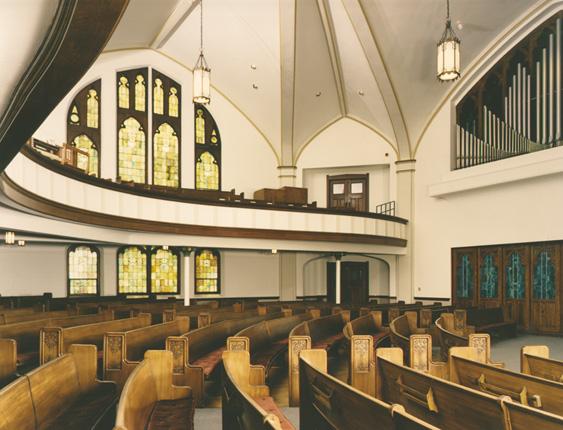
I was raised in a Christian house, went to church every Sunday and Wednesday, was the youngest (and highest revenue generating) usher in my church’s history (there is absolutely no data to back up this claim), sang in choir from the earliest age until I went to college, and was fully confirmed. The dwindled congregation of First Presbyterian has since disbanded and the building has been sold to a performing arts organization, but I can still walk the halls of that grand building in my head and see the details of every room, corner, and hiding place.
I also went to a liberal arts college where I let go of my religious beliefs when I realized that the universe could be just as cool without the existence of a sentient creator. Yet, at the same time, my courses in philosophy, history and the study of ethics instilled a deep curiosity about religion.
So…I may have been able to shake my Christian guilt, but I am a sympathetic critic.




 A Card Carrying Centrist